

Greek myths tell stories of love, tragedy and human nature: Daedalus and Icarus
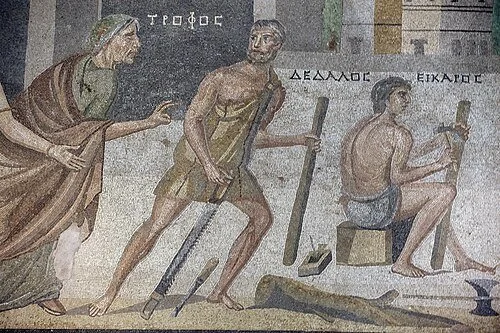
A Roman mosaic from Zeugma, Turkey depicting Daedalus and his son Icarus
In Greek tradition, the tale of Daedalus and Icarus was already well known in ancient Greece by around the 5th century BCE, and the Roman poet Ovid famously retold it in his book Metamorphoses around 8 CE. It is imagined as taking place sometime during the Bronze Age, roughly between 2000 BCE and 1200 BCE.
Daedalus (Δαίδαλος) was a brilliant inventor and craftsman who lived on the island of Crete. He designed the famous Labyrinth, a massive maze built to imprison the terrifying Minotaur, a dangerous and fierce creature with τhe body of a man and the head and tail of a bull. People were sent into the maze as sacrifices. After Theseus, king of Athens and enemy of King Minos, escaped from the labyrinth, Minos suspected that Icarus and Daedalus had revealed the labyrinth's secrets and thus imprisoned them in a large tower overlooking the ocean.
Daedalus planned an escape using wings he constructed from birds' molted feathers, threads from blankets, the leather straps from their sandals, and beeswax. Before they flew away, he warned Icarus:
Do not fly too low, or the sea’s moisture will weigh down the wings.
Do not fly too high, or the sun’s heat will melt the wax.
At first, Icarus followed his father carefully. But as he flew, he became excited and overconfident. Ignoring the warning, he soared higher and higher toward the sun. Without warning, the heat from the Sun softened and melted the wax., that started dripping down his arms. The feathers then fell one by one. Icarus kept flapping his "wings", trying to stay aloft. But he realized that he had no feathers left. He was only flapping his bare arms. Finally, he fell into the sea, sank to the bottom, and drowned. Daedalus wept for his son and called the nearest land Icaria, in the memory of him.
Today, the island of his burial bears his name, and the sea near Icaria in which he drowned is called the Icarian Sea. With much grief, Daedalus went to the temple of Apollo in Sicily, hung up his own wings as an offering, and promised to never attempt to fly again.
Literary interpretation sees the myth of Icarus as a warning against having excessive ambition. The phrase “flying too close to the sun” still comes from this myth today.
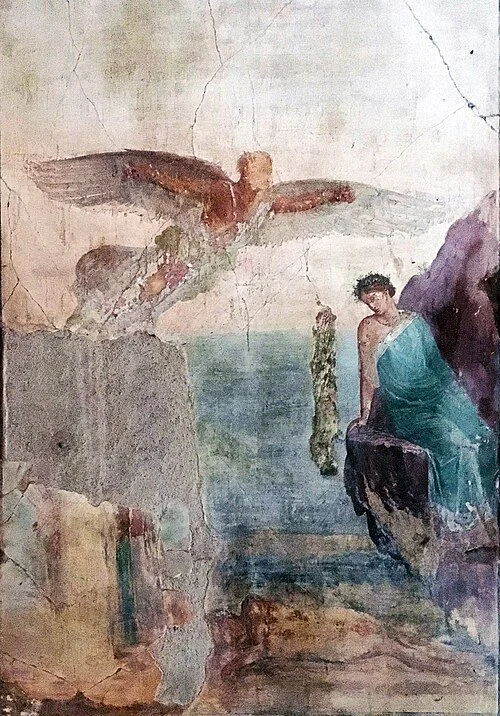
A fresco in Pompeii depicting Daedalus and Icarus, 1st century
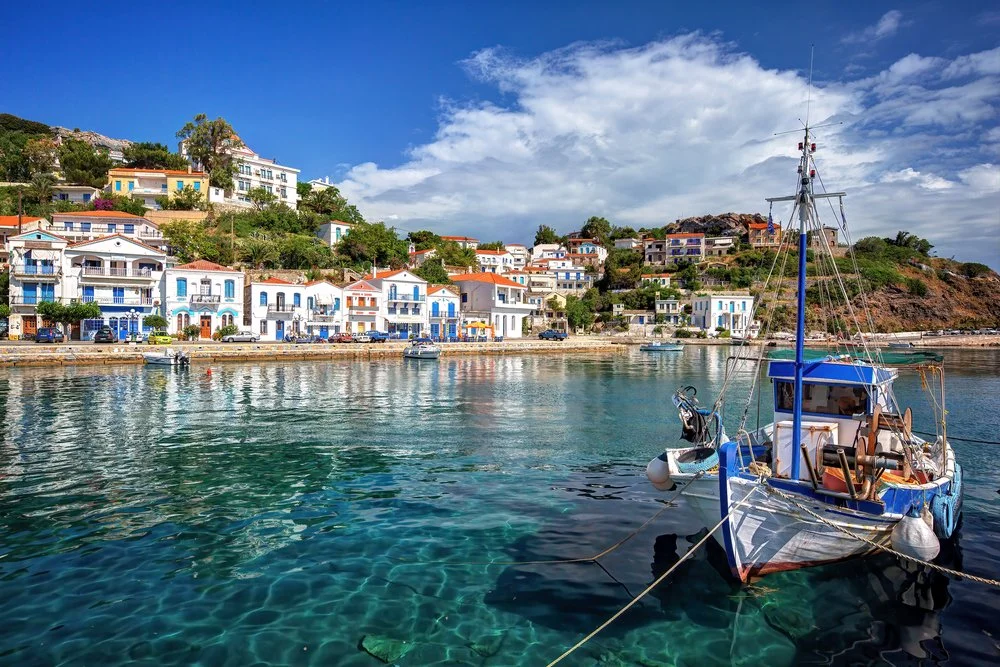
Today, Icaria is known for its picturesque mountain villages, natural hot springs, scenic hiking trails, beautiful beaches, and vibrant all-night festivals filled with music, dancing, wine, and traditional food. The island is also recognized as one of the world’s five “Blue Zones,” regions where people commonly live remarkably long lives, often reaching their 90s or even 100s.
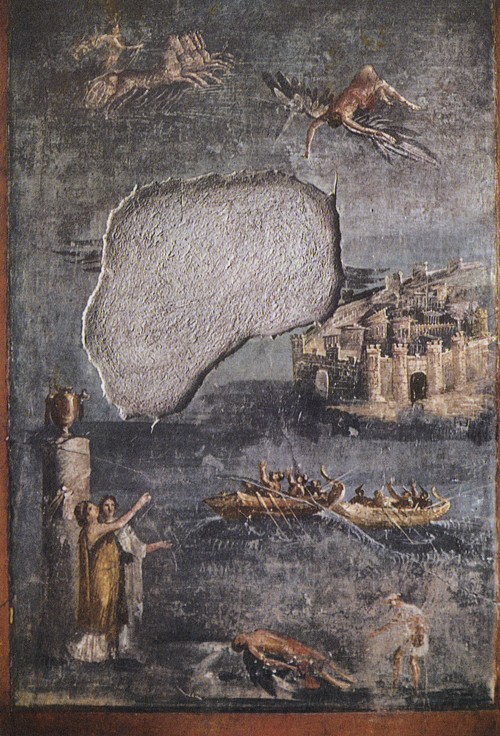
The Fall of Icarus. Antique fresco from Pompeii, 40–79 AD